
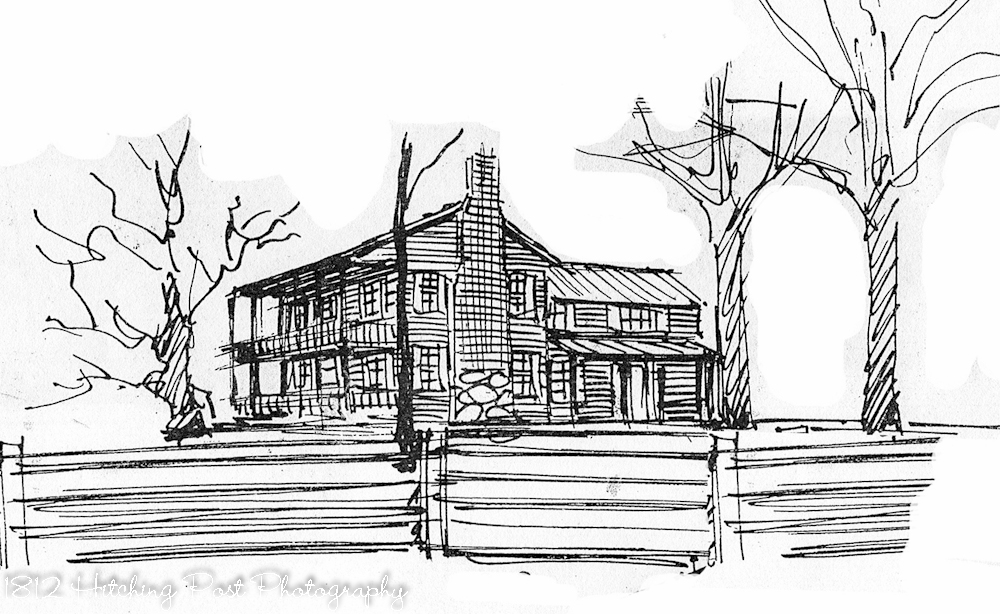
Long before the 1812 Hitching Post became a place where couples celebrate love and commitment, this home stood as a witness to America’s changing history.
In the 1850s, this home was connected to the Turner family of Turnersburg. Wilfred Turner, an Iredell County businessman and community leader, lived here during a time when the nation was deeply divided. His youngest son, Wilfred Dent Turner, was born in this home in 1855 — just years before the Civil War would transform the country forever.

The “Marrying Stone” under the giant oak tree still stands where couples would come to start their marriage on a firm foundation.
While Juneteenth began in Galveston, Texas, its meaning reached communities across the South, including Iredell County. The years after emancipation brought enormous changes as formerly enslaved families built new lives, established homes, strengthened churches, and created traditions that would be passed down for generations.
Here in Iredell County, families experienced the transformation of the post-Civil War era firsthand. Marriage, family, and community took on new meaning. Couples who had lived together during slavery could seek legal recognition of their marriages. Families separated by the realities of slavery worked to reconnect and create new futures.
The Turner family name became deeply connected with the Turnersburg community. The family established industries and helped shape the area that would carry their name. But the story of this land is also the story of the many unnamed families — farmers, laborers, craftsmen, mothers, fathers, and children — whose lives unfolded alongside this home.
Today, when couples exchange vows at 1812 Hitching Post, they are continuing a tradition that has existed here for generations: gathering together to celebrate family, commitment, and hope.
Juneteenth reminds us that freedom is not only found in historic documents. It is found in the everyday lives of people who built families, created communities, and left stories behind for future generations.
A historic home is more than wood and nails. It is a witness.
And this home has witnessed more than two centuries of love, resilience, and history.
1813 1900
Read more about Lt. Gov. W. D. Turner
Why Historic Places Matter
Historic places help us remember that history is not just about famous events. It is about ordinary people whose lives shaped the communities we know today.
Here in Iredell County, historic homes, churches, farms, and gathering places witnessed generations of families celebrating births, marriages, holidays, reunions, and milestones. They stood through periods of challenge and periods of growth.
At 1812 Hitching Post, we are reminded daily that the land beneath our feet has witnessed more than two centuries of American history. Long before it became a wedding venue, this property was part of a community where families worked, worshipped, celebrated, and built lives together.
The stories of those who came before us deserve to be remembered.
Read more about the history of the 1812 Hitching Post
Freedom, Family, and Legacy
One of the most powerful lessons of Juneteenth is the importance of family and legacy. The holiday reminds us that freedom is not only about laws and proclamations. It is also about the ability to create traditions, build communities, and pass stories from one generation to the next.
As we celebrate Juneteenth, we honor those who persevered through difficult times and helped build the communities we enjoy today throughout Iredell County and North Carolina.
Their stories remind us that history lives not only in books, but also in the places we preserve, the families we cherish, and the memories we create together.
From all of us at 1812 Hitching Post, we wish you a meaningful Juneteenth filled with reflection, gratitude, family, and hope.
